Role
Lead Product Designer
Worked on
Webapp Design (Responsive)
Timeline
6 Months
Industry
Edtech

Overview
Landmark University is a private institution in Nigeria committed to educating students across diverse fields for a better future. However, many of its processes were scattered across multiple digital platforms, with some being repetitive and others underutilized due to usability challenges, while certain processes remained paper-based. This project aimed to unify and digitize these workflows into a cohesive platform that streamlines all of the University's operations across five core modules: Admissions, Student Portal, Staff Portal, Parent Portal and HR Management
Design Process
1.
Discovery
Discussed with key stakeholders to gather insights on usability issues in the existing systems and to identify processes the School wanted digitized. They also shared documentation outlining the university’s workflows and provided access to existing portals, which allowed me to assess additional usability challenges.
2.
Define
Analyzed stakeholder insights and portal evaluations to create clear problem statements and requirements for the unified platform.
3.
Design
User flows were created for the admissions process and key administrative tasks, followed by wireframe development to explore layout options and streamline workflows, then high-fidelity mockups were produced to reflect the look and feel.
4.
Refine
Usability testing sessions were conducted with selected users and stakeholders, after which feedback was reviewed to identify areas needing improvement and iterations were made to enhance clarity, accessibility, and ease of use.
5.
Deliver
Final design assets and specifications were prepared for developer handoff, along with design documentation and guidelines to ensure consistency, while support was provided during implementation to maintain design quality.
Understanding the Problem
Fragmented systems – multiple standalone platforms created inefficiencies.
Repetitive processes – tasks often had to be completed across different systems.
Poor usability – some portals were difficult to navigate, leading to underuse.
Paper-based workflows – certain processes remained manual, slowing productivity.
Lack of cohesion – no single source of truth for students, faculty, and administrators.
Design Non-Negotiables
From the several Stakeholder’s meeting all through the project, the following was made clear or concluded upon.
Process Fidelity: the platform had to reflect real-life university workflows to ensure smooth adoption. For example, In the admission process, If a document passes through A, B, and C in real-life, the design should imitate the same.
Clarity, Consistency and Usabilty
Accessability: Should accommodate diverse users, including those with varying digital literacy levels.
Design Approach
Role Based Access Control (RBAC)
To ensure security and usability at scale, we implemented role-based access, meaning each user type (students, lecturers, administrators) has tailored permissions. This not only safeguarded sensitive data but also simplified user journeys by limiting screens and actions to what was necessary.
Desktop-First Approach
Since core users like administrators and lecturers work primarily on desktops, the system was designed desktop-first to handle complex workflows and data-heavy tasks effectively. Responsive adaptations were then applied to ensure a smooth experience for students and mobile use cases.
Solutions & Rationale
Programme Eligibility & Mapping
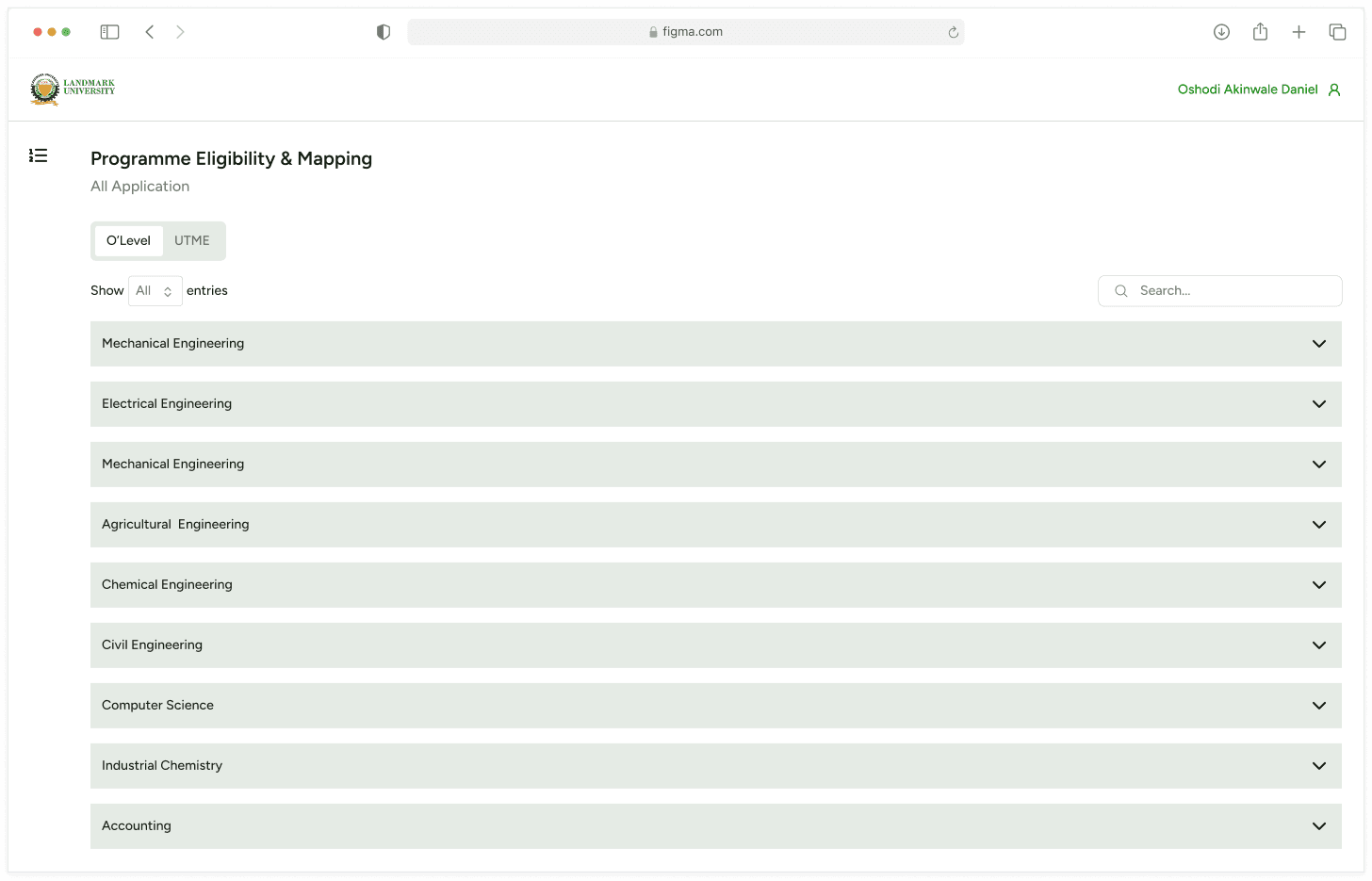
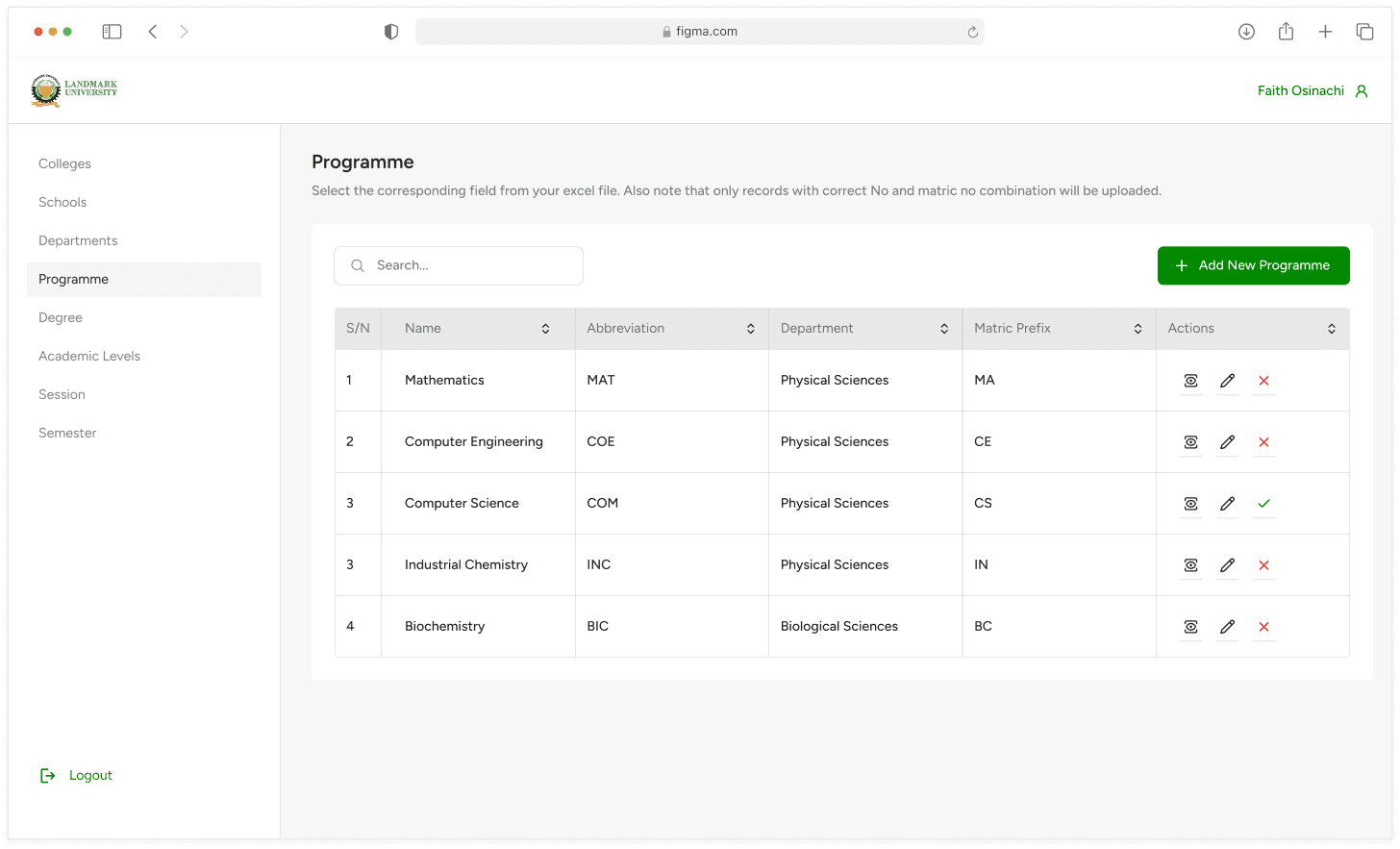
The previous system allowed students to apply for any programme through an unfiltered dropdown, regardless of whether their exam subject combinations met eligibility requirements. This led to numerous ineligible applications that admissions staff had to manually review and reject. I designed an eligibility mapping feature that enables administrators to configure programme availability based on examination subject combinations. Students now only see programmes they're qualified for during the application process, preventing ineligible submissions before they occur.
Rationale: By validating eligibility at the point of selection rather than after submission, this solution eliminates wasted effort for both applicants and admissions staff while reducing application errors and improving the overall efficiency of the admissions workflow.
Evaluation Question Management
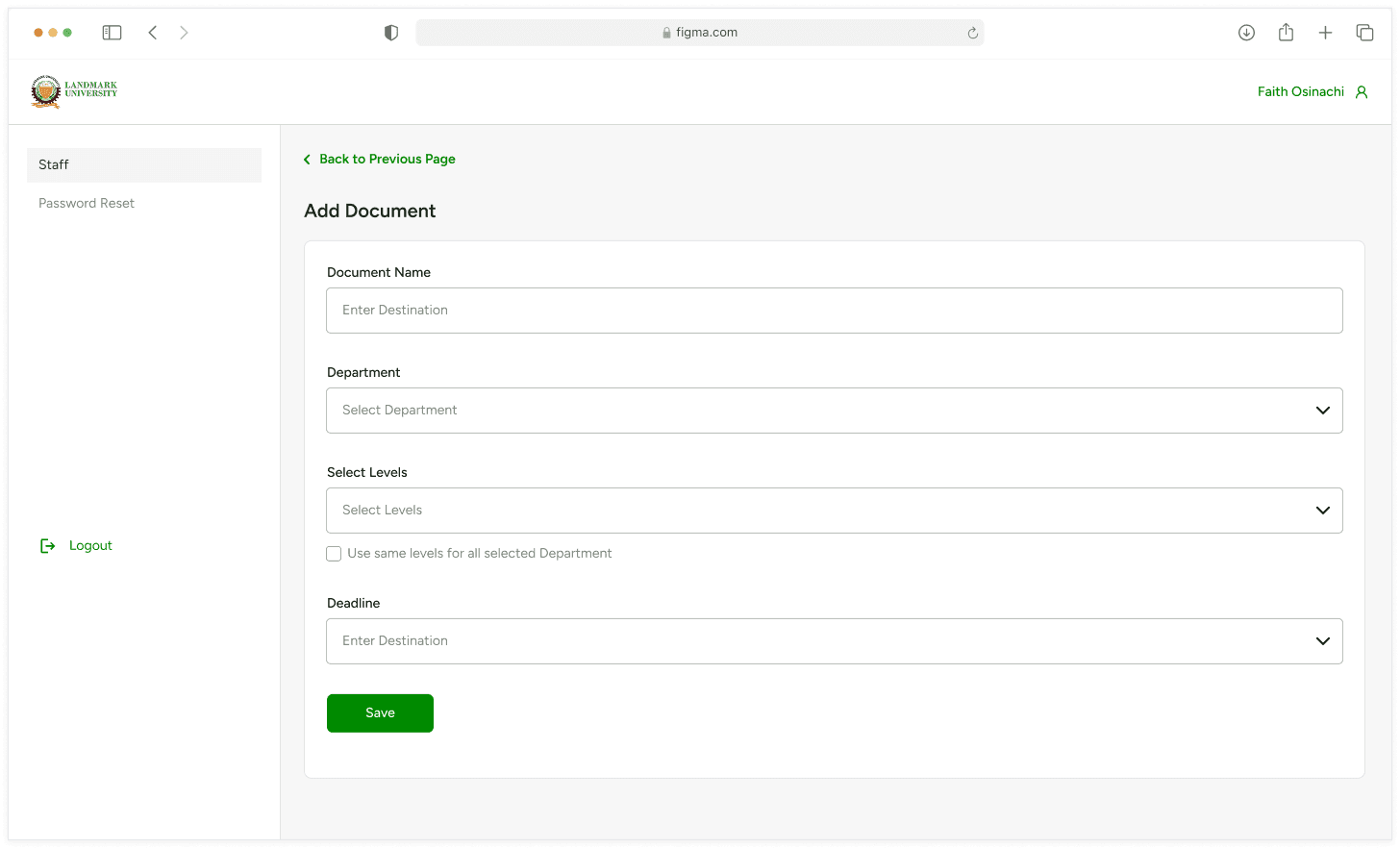
Previously, evaluation questions for staff, students, and courses were hardcoded in the system, requiring developer intervention and code deployment for any changes. This created bottlenecks whenever the university needed to update evaluation criteria or add new questions. I designed an administrative interface that enables non-technical staff to create, edit, and manage evaluation questions across all three evaluation types. Administrators can now configure questions, modify response formats, and update evaluation criteria without technical dependencies.
Rationale: Moving question management from the codebase to an admin interface eliminates developer bottlenecks, allows for rapid iteration on evaluation criteria, and gives the institution direct control over their assessment processes.
Workflow Digitization
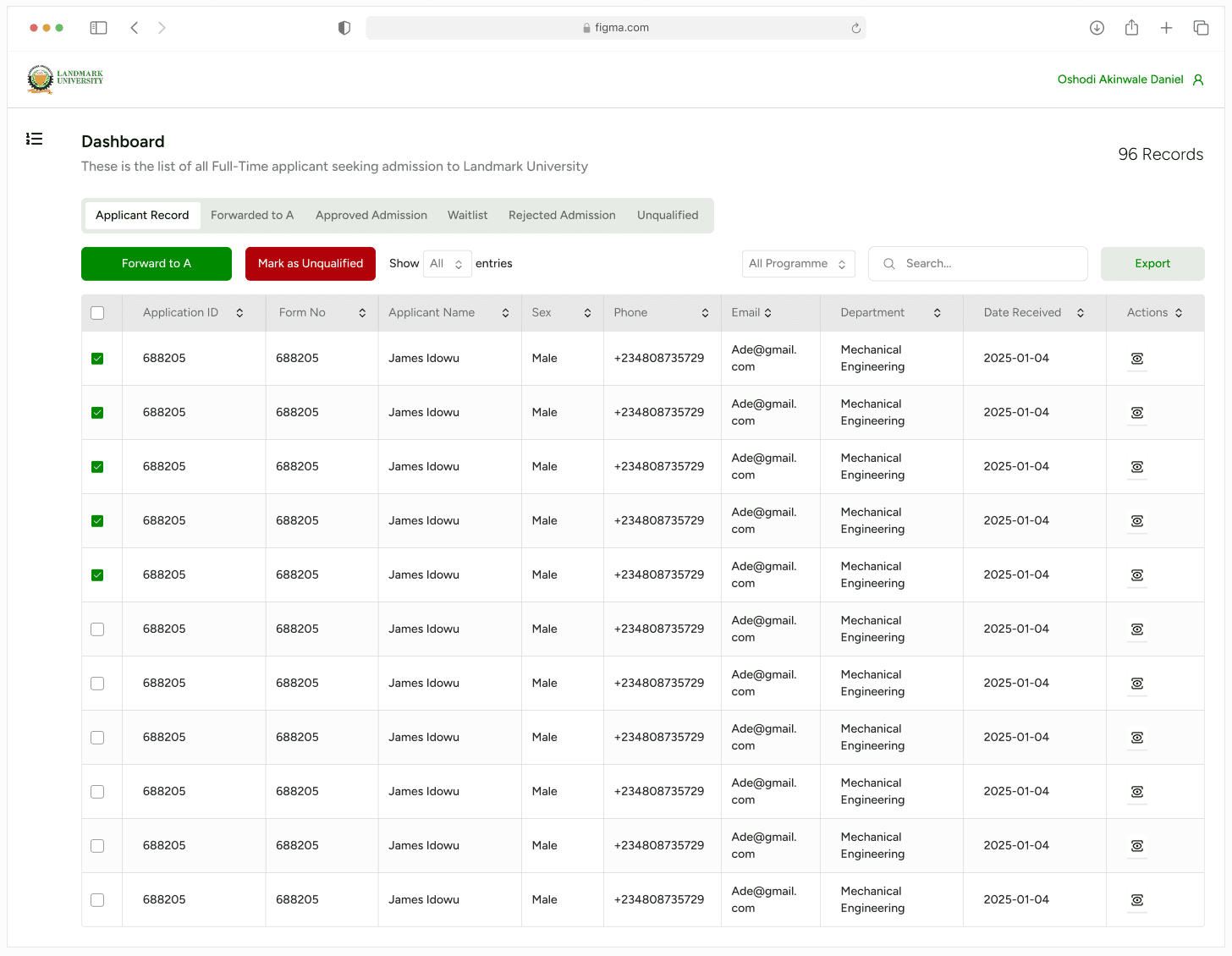
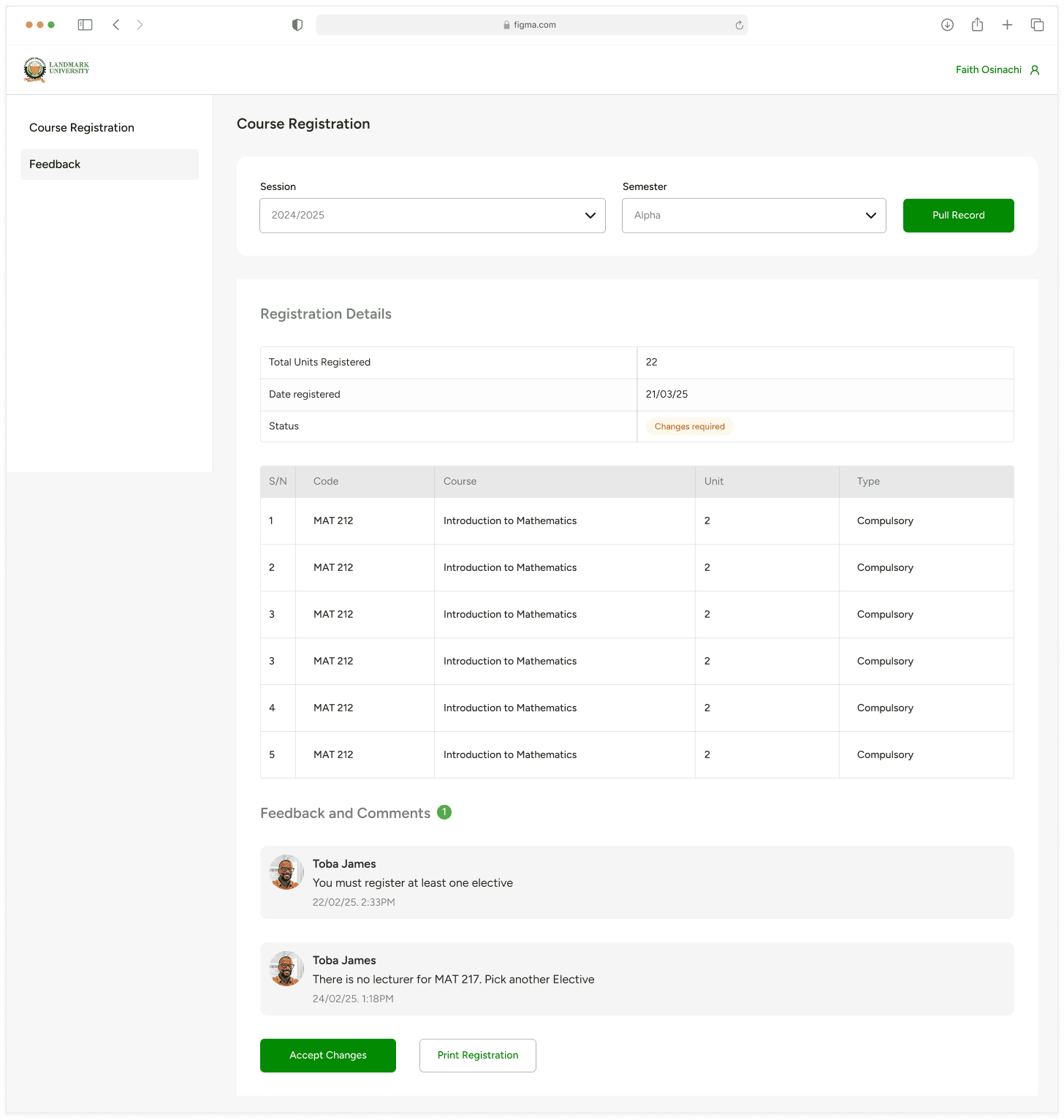
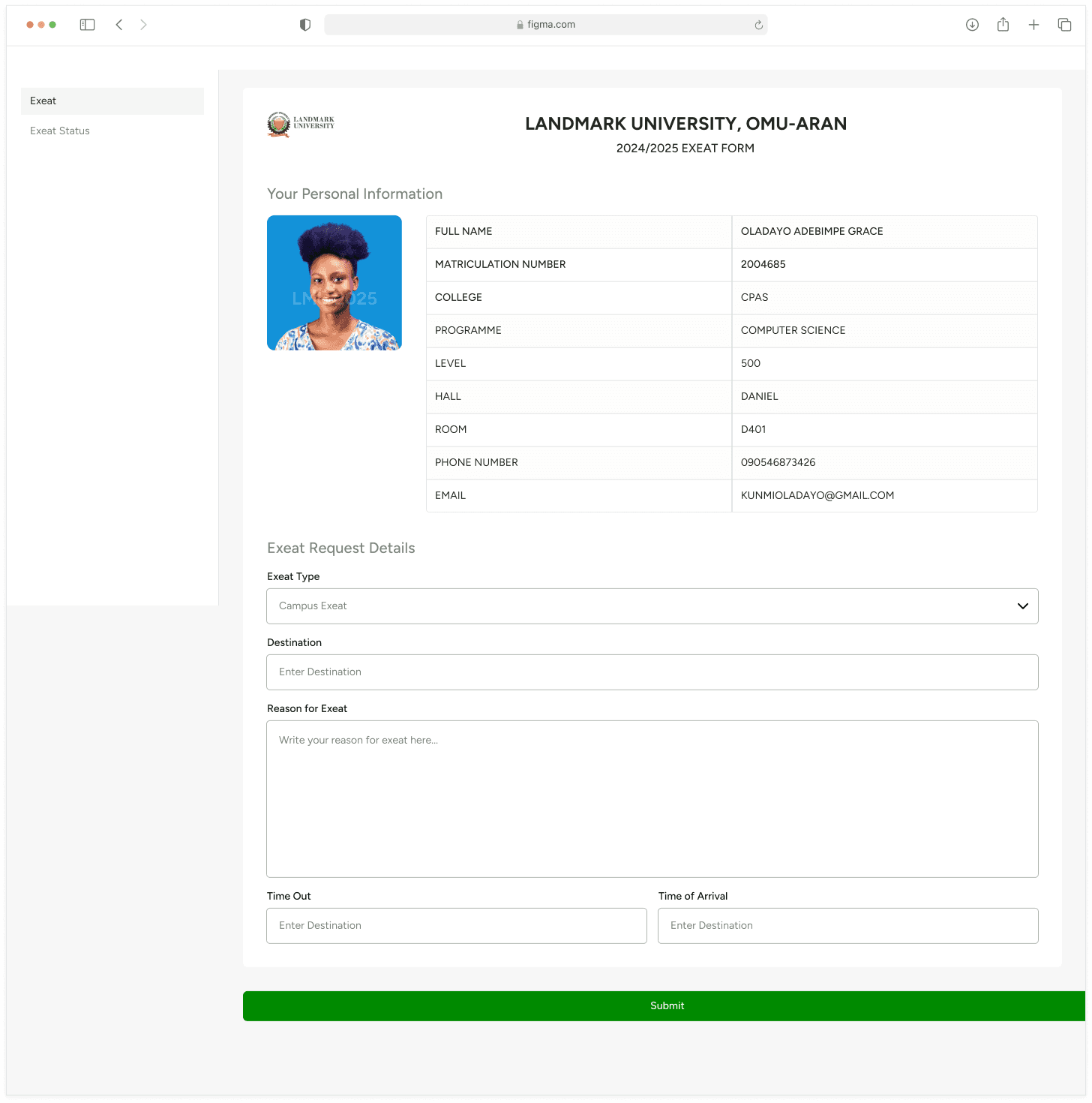
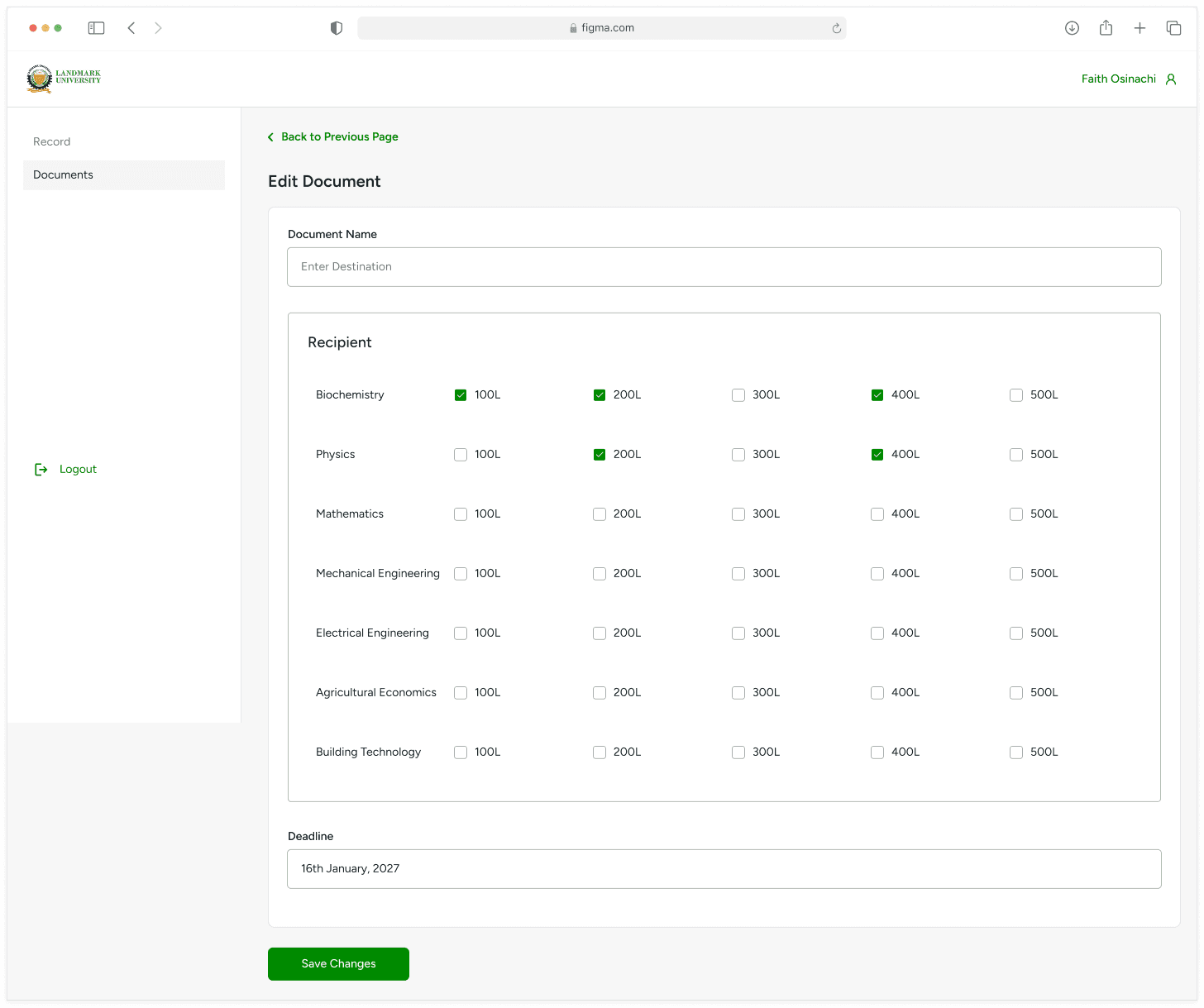
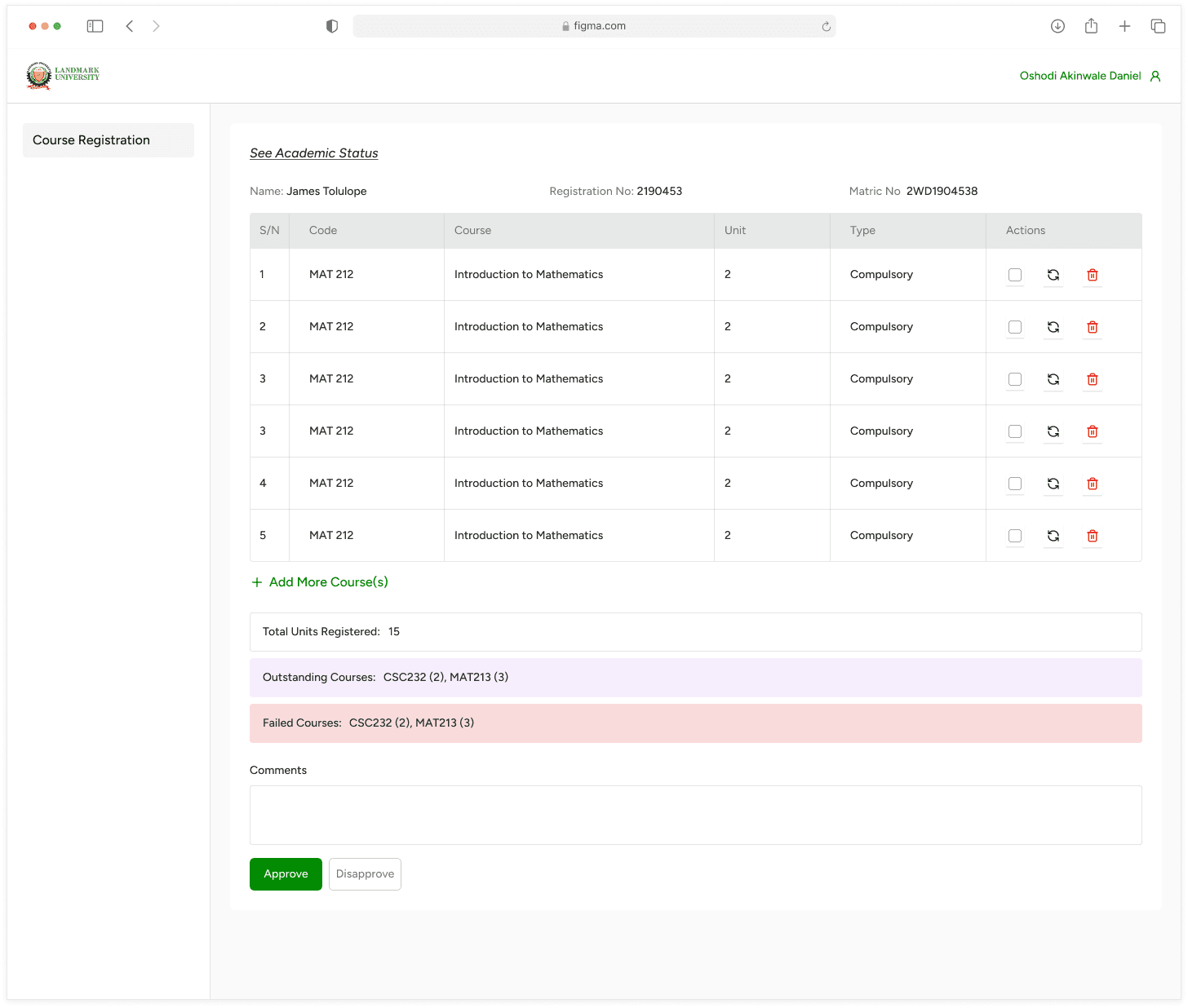
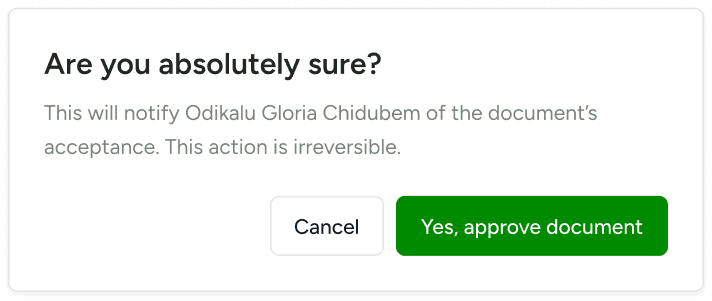
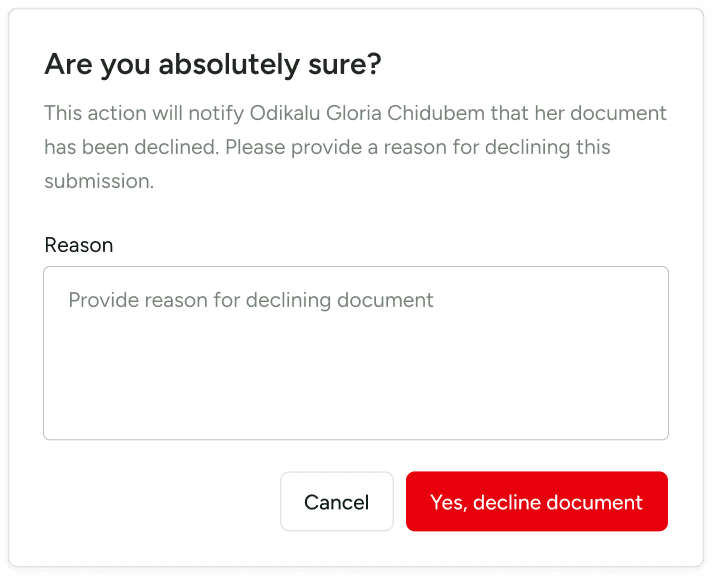
Multiple critical processes relied on paper-based workflows and manual handoffs, including admissions decisions and exeat requests. The admissions process involved offline coordination between personnel for approving, waitlisting, or rejecting applicants, while exeat requests required physical forms and in-person approvals. Both created delays, administrative burden, and poor tracking. I digitized these workflows, designing role-based interfaces that enable online submissions, configurable approval criteria, and automated routing between stakeholders. Personnel can now process admissions decisions and exeat requests digitally with full visibility and audit trails.
Rationale: Digitizing these workflows eliminates manual coordination, reduces processing time and paper usage, and creates systematic record-keeping while maintaining institutional control through configurable criteria.
Screen Highlights
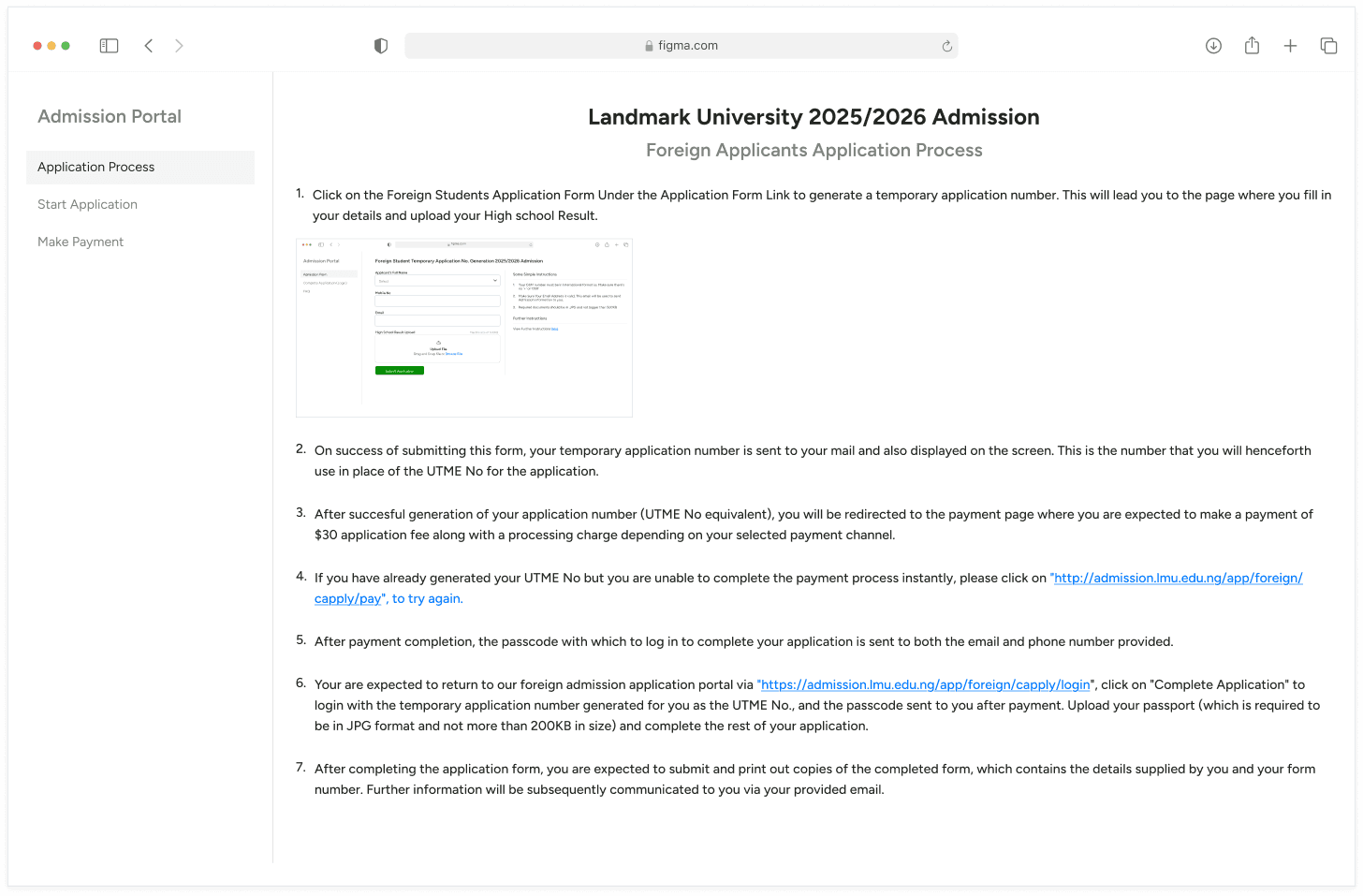
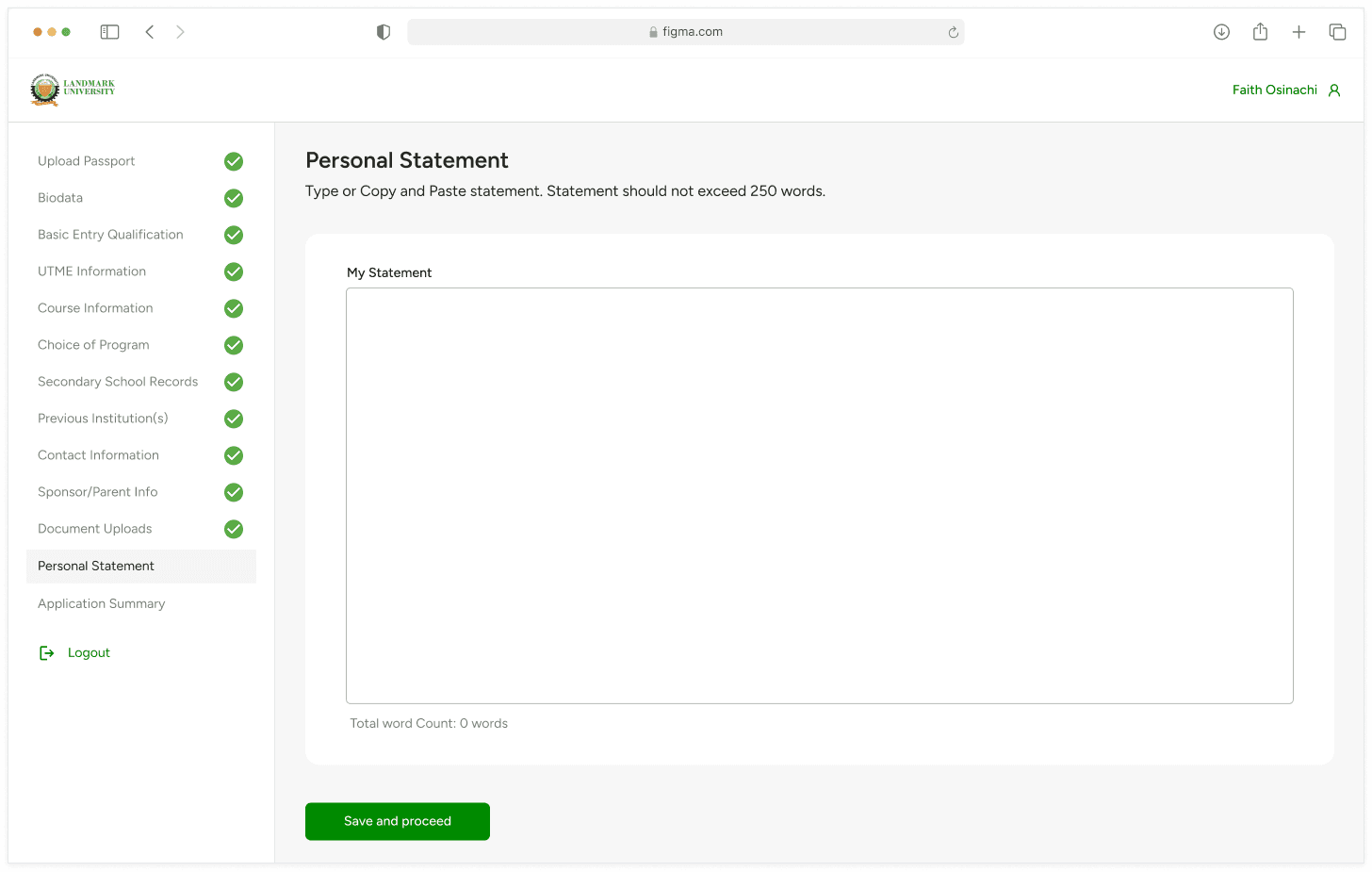
View the live admission portal here: Landmark Admission
Learnings
This project taught me the importance of balancing speed with perfection, especially at such a large scale. I also realized that design is rarely a linear process; iteration is not a setback but a step forward toward better solutions. Most importantly, I learned that the best products are built around the unique contexts of their users, making thorough research essential.