Landmark University HR
Role
Lead Product Designer
Worked on
Webapp Design (Responsive)
Timeline
4 Weeks
Industry
Edtech

Overview
This project extends the Landmark University Management System (LUMS) with a dedicated HR module designed to centralize critical personnel operations. The solution streamlines core HR functions including payroll processing, recruitment workflows, leave management, and disciplinary tracking—addressing the complex administrative needs unique to higher education institutions.
Design Process
1.
Stakeholder Discovery
I conducted discussions with key HR personnel and administrators to understand existing manual workflows, from how payroll was calculated to how leave requests moved through approval chains. This revealed pain points, bottlenecks, and the nuances of university-specific HR processes that needed to be preserved or improved in the digital solution.
2.
Collaborative Ideation
Working closely with the development team, I ideated solutions that balanced user needs with technical feasibility. This early collaboration ensured proposed features could be realistically implemented within system constraints and timelines.
3.
High-Fidelity Design
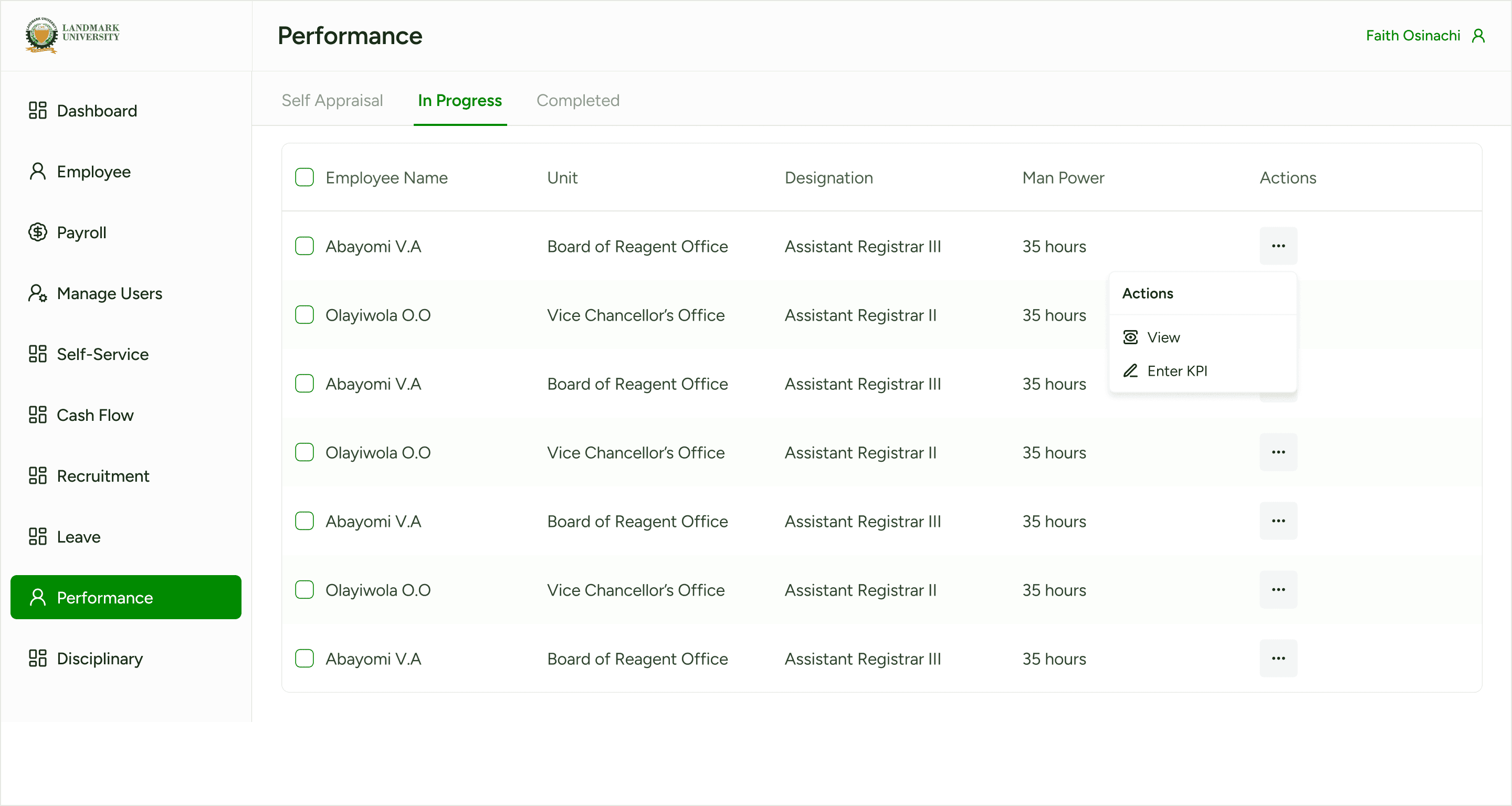
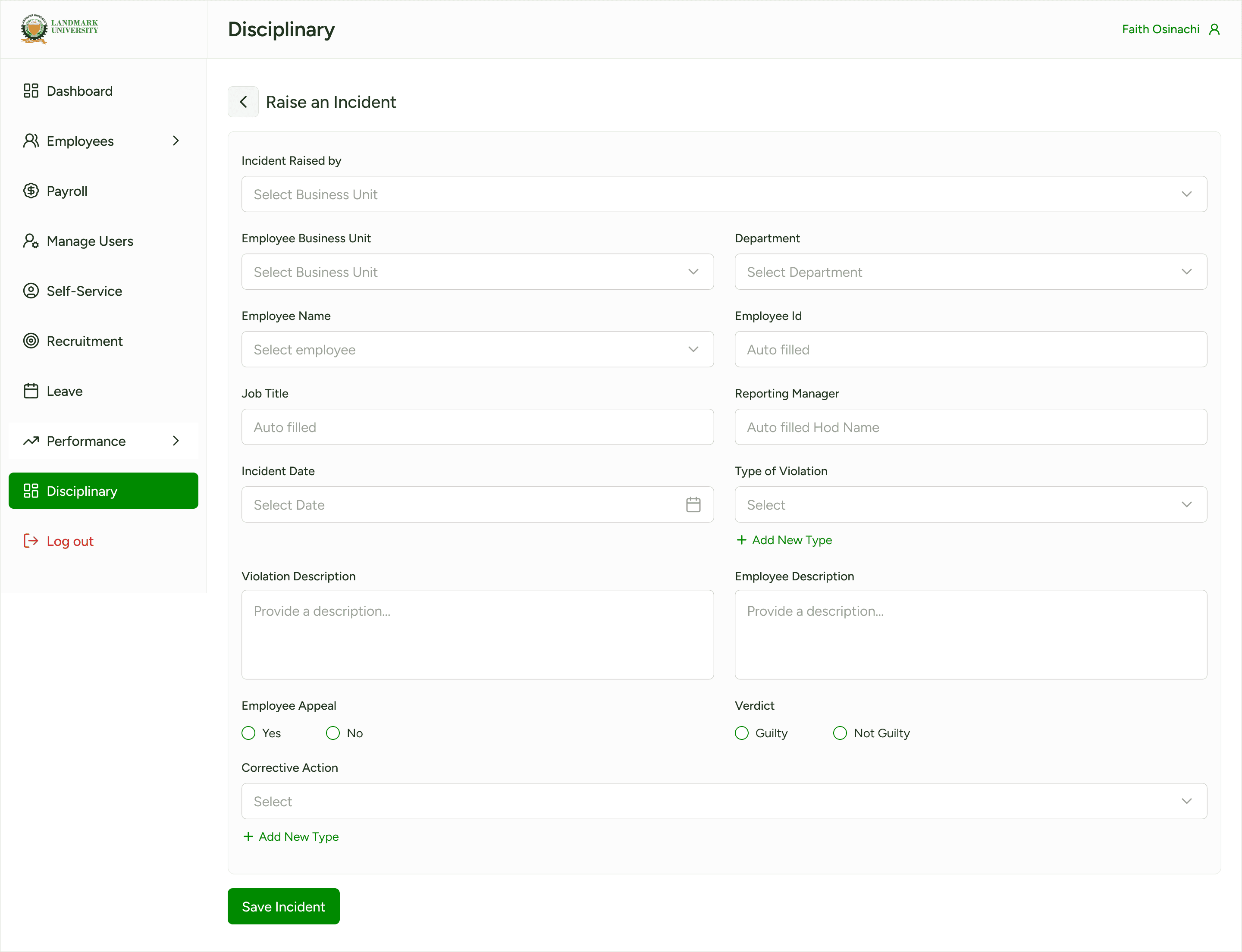
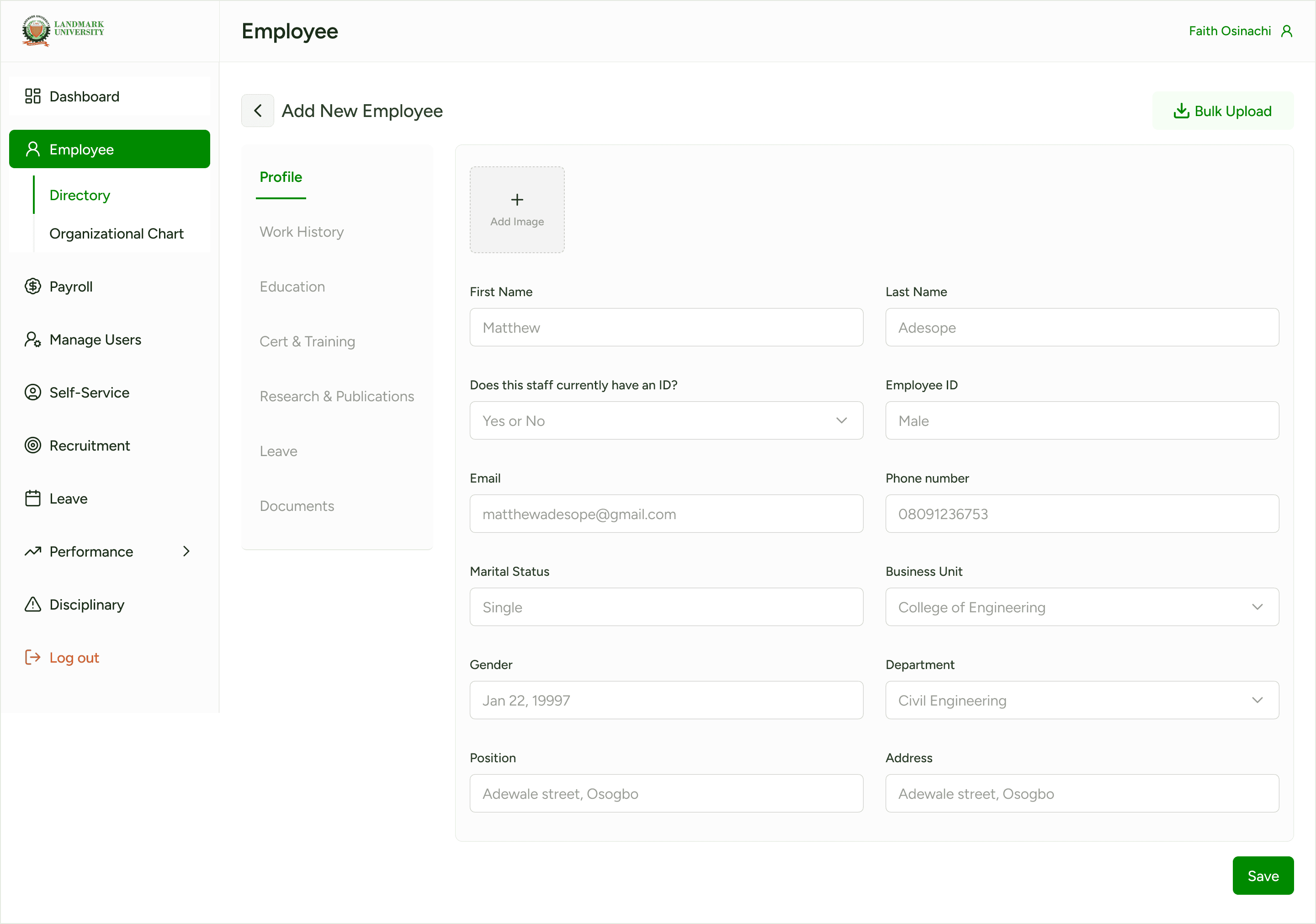
I created high-fidelity designs for core modules including payroll processing, recruitment workflows, leave management, and disciplinary tracking. The designs ensured the interface could handle complex data while remaining intuitive for daily HR operations.
4.
Stakeholder Validation
I presented designs to key stakeholders (HR leads, department heads, and administrators) to validate that the digital workflows accurately reflected their processes and would genuinely improve efficiency. This collaborative review surfaced important adjustments before development
5.
Iteration & Refinement
Based on stakeholder feedback, I refined the designs to better align with operational realities and user preferences, ensuring the system would be adopted smoothly.
5.
Developer Handoff
I prepared comprehensive design specifications and maintained ongoing collaboration with developers during implementation to ensure design integrity and address any technical questions.
Understanding the Problem
Landmark University's HR operations were entirely manual, creating significant operational inefficiencies and scalability challenges as the institution grew.
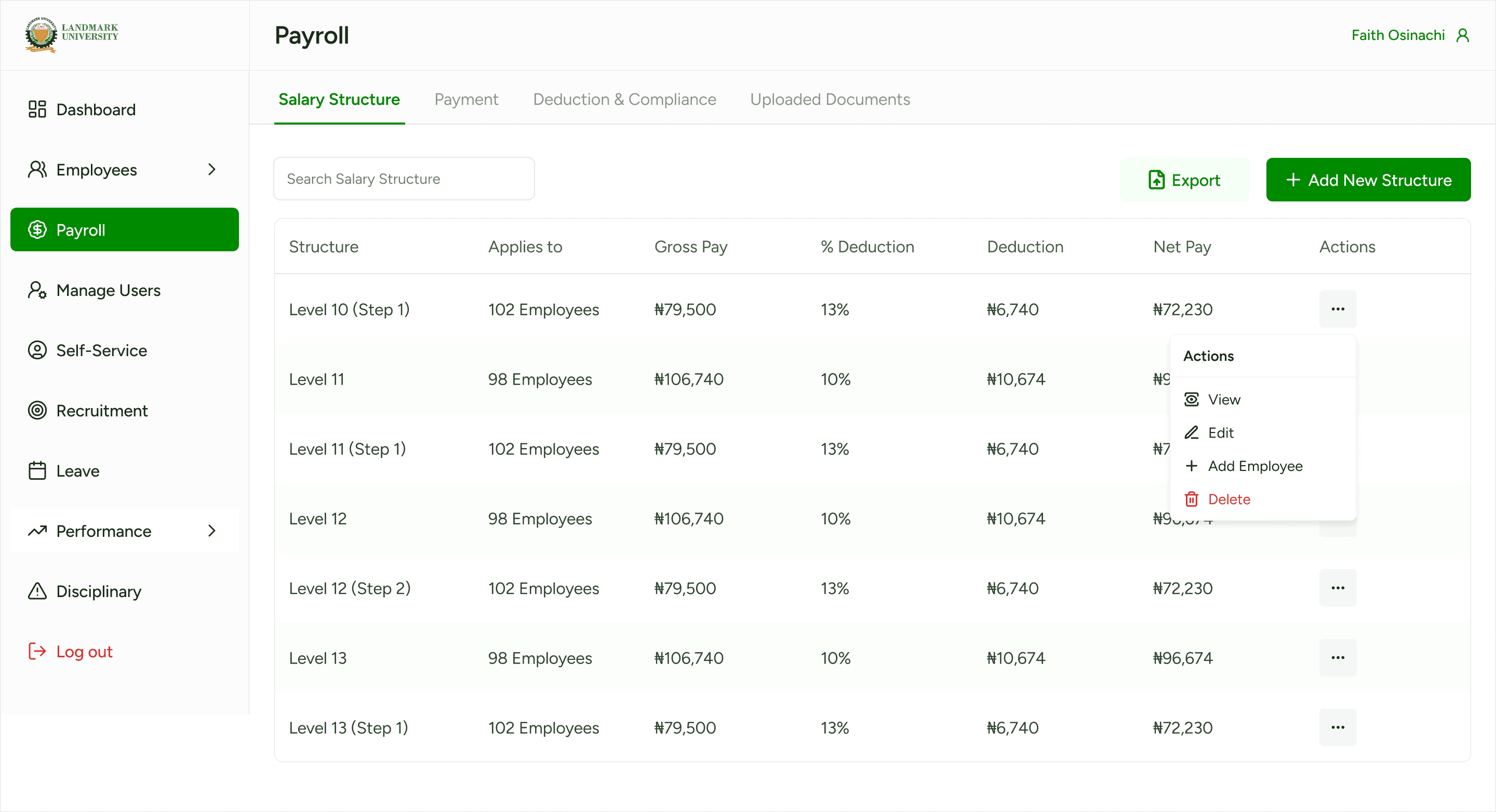
Payroll Complexity – Payroll structures were computed in Excel spreadsheets, with payments triggered manually. This became increasingly difficult to manage when factoring in multiple deductions (taxes, pension, loans, advances), leading to potential errors and consuming substantial administrative time each pay cycle.
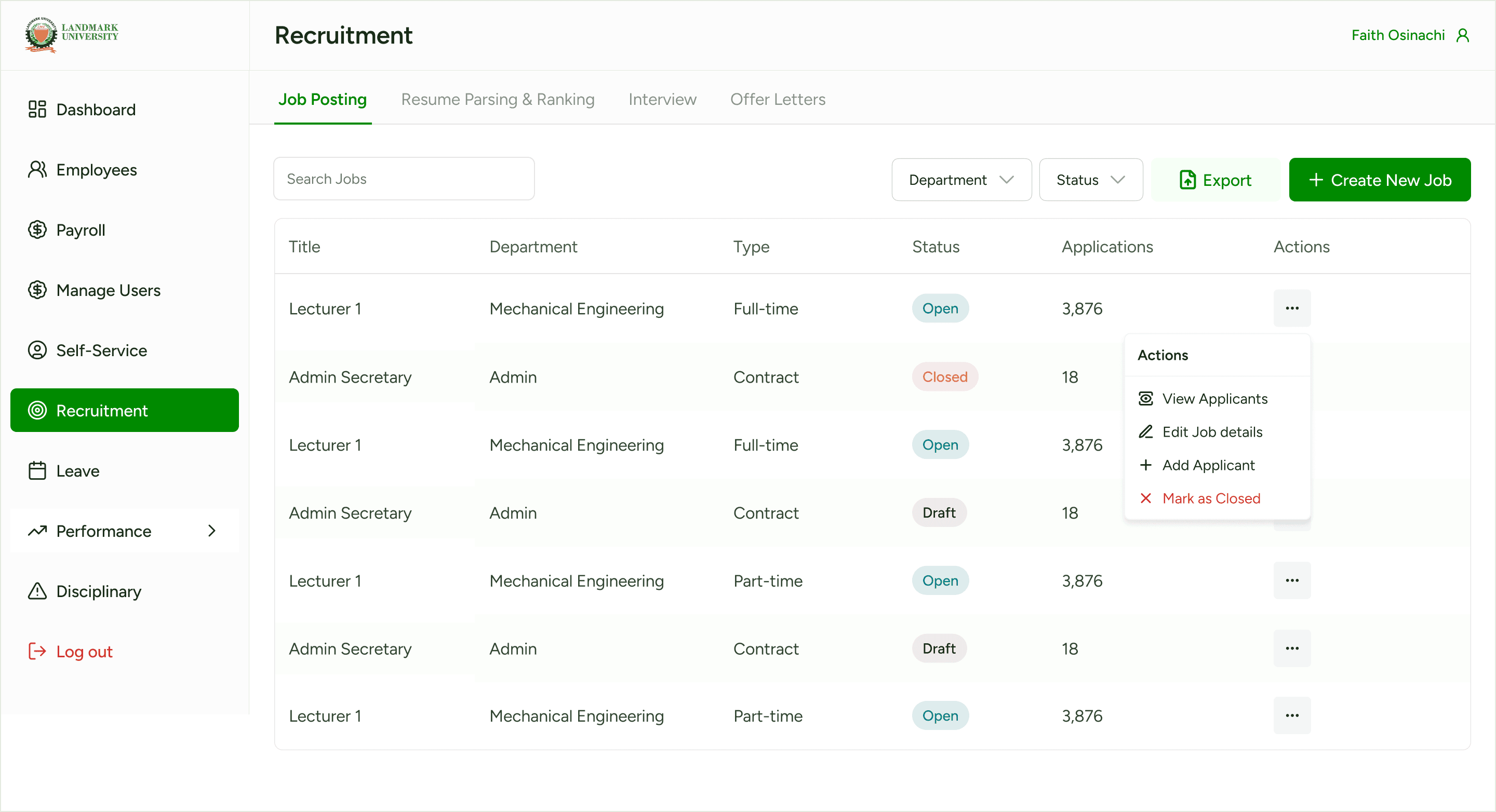
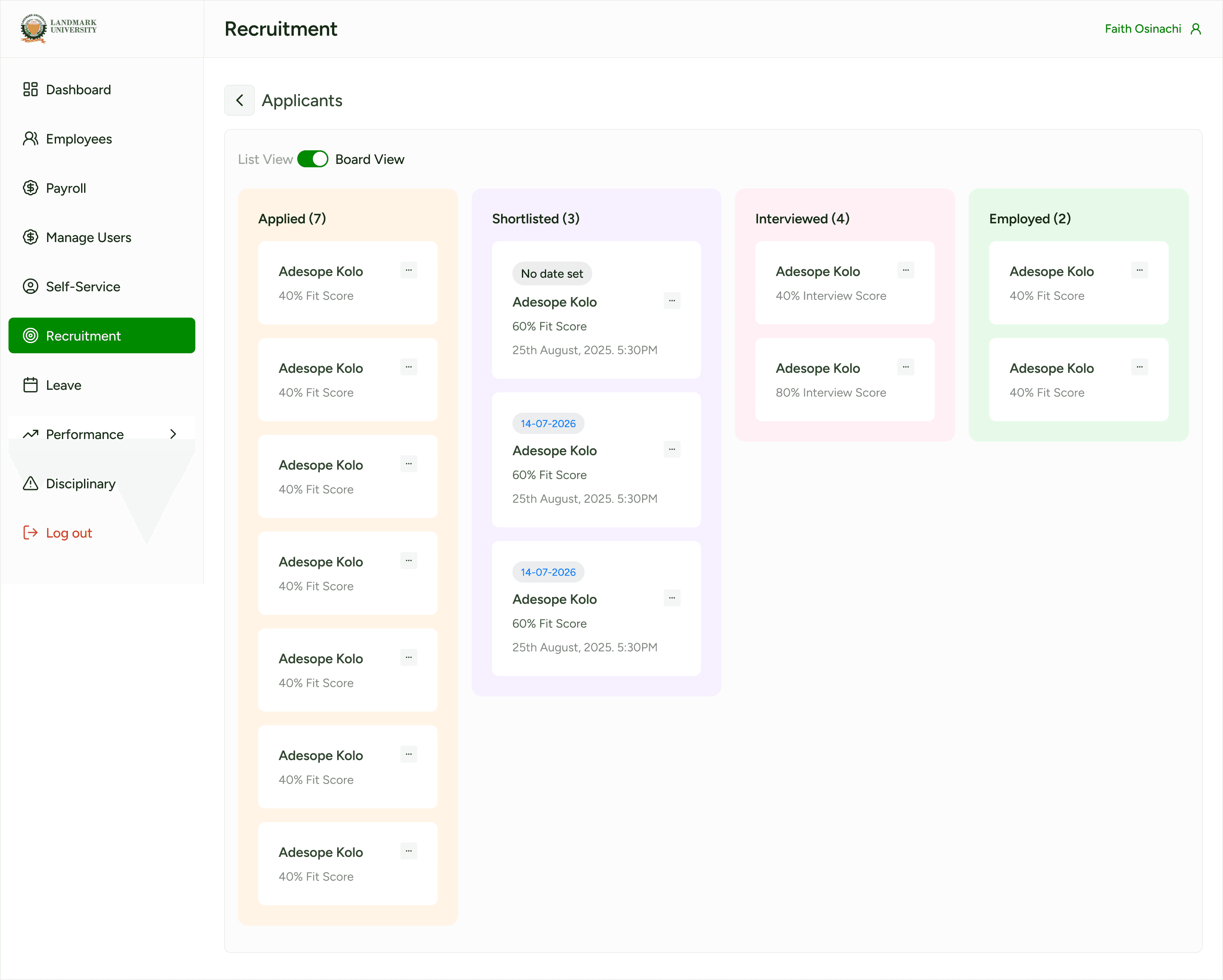
Recruitment Bottlenecks – Without a centralized system, the recruitment process was paper-based and time-consuming. HR staff had no dashboard to track applicants, view application history, or manage the hiring pipeline efficiently. When dealing with high volumes of applicants, this manual approach created delays and made it difficult to identify the best candidates quickly.
Outdated Appraisal System – The existing performance appraisal process no longer met the university's evolving requirements and failed to capture the specific realities of academic and administrative roles, limiting meaningful performance evaluation.
Fragmented Request Management – All HR requests funneled through a single channel regardless of category (leave, advances, complaints, approvals), making it difficult for the appropriate personnel to manage and respond efficiently. There was no systematic way to route requests to the right departments.
Manual Leave Tracking – Staff leave management was tracked manually using Excel spreadsheets, with no automated system to monitor allocated leave days per calendar year, approved absences, or remaining balances. This created confusion and administrative overhead for both HR staff and employees.
Non-Functional Disciplinary Records System – The existing digital disciplinary record system was non-functional, leaving the university without an effective way to document violations, track disciplinary measures, or enable anonymous reporting. This made it difficult to maintain accountability and address workplace issues appropriately.
Solutions & Rationale
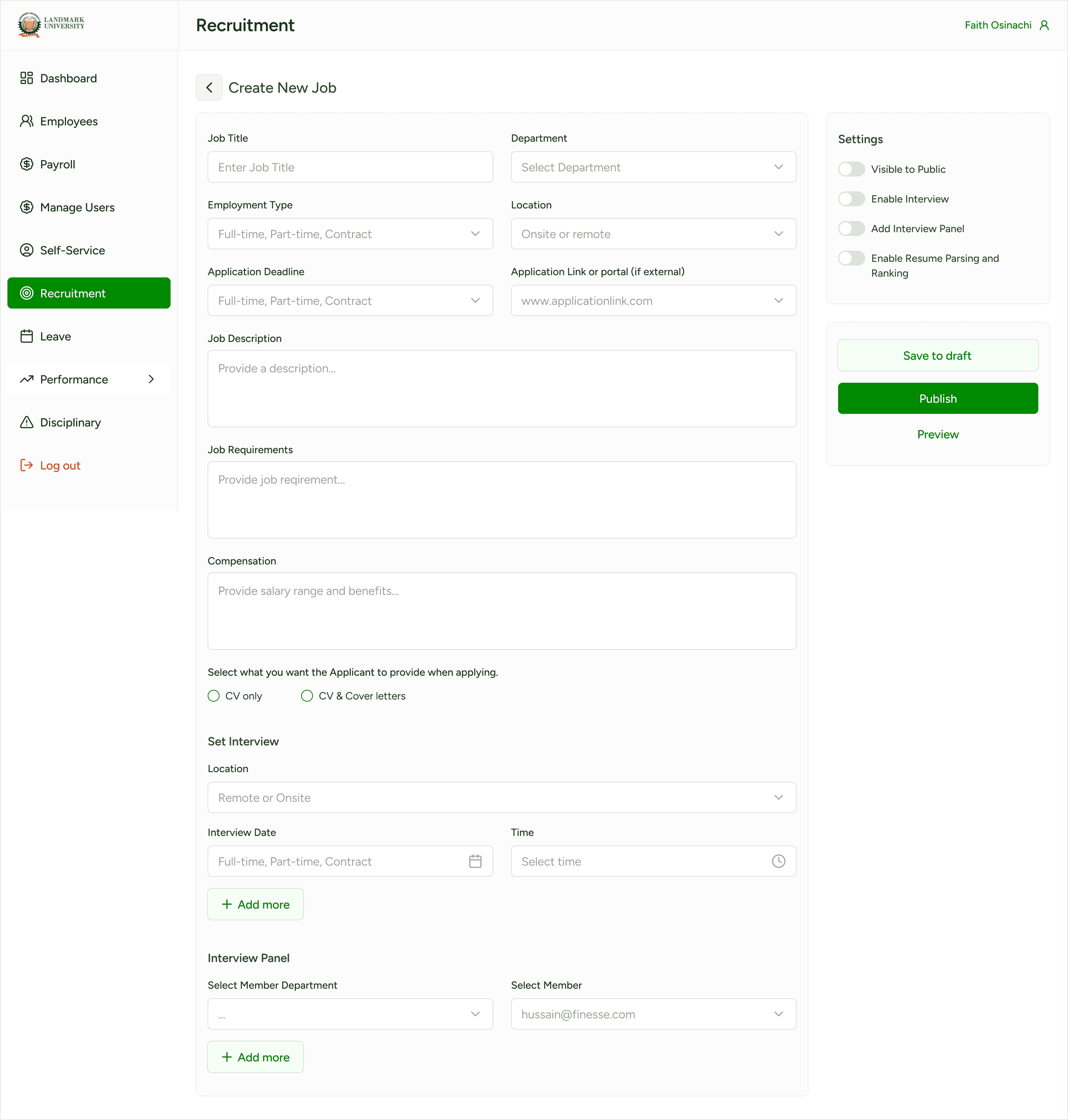
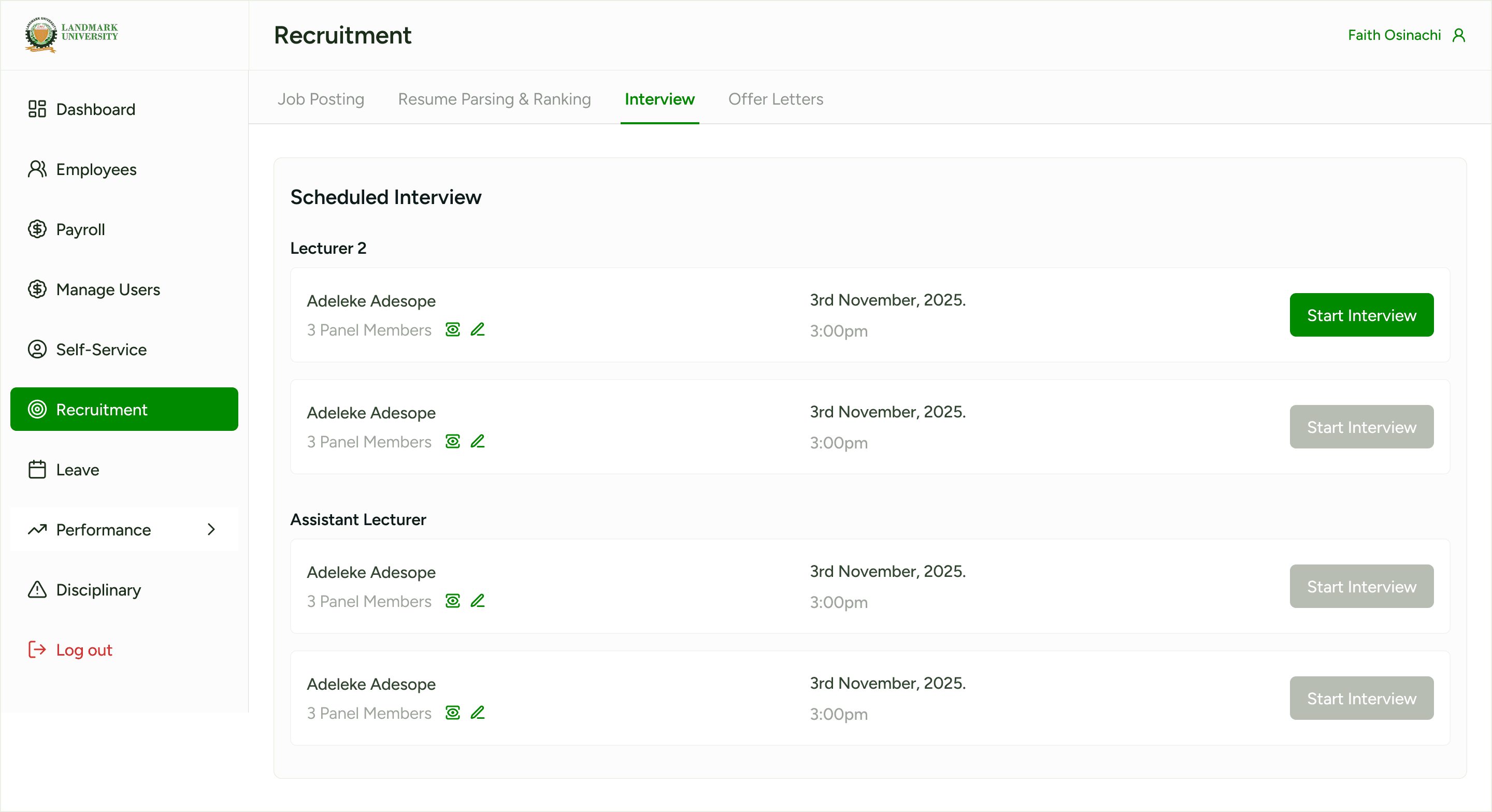
Intelligent Recruitment with ATS
I designed the interface for an integrated Applicant Tracking System, creating intuitive controls that allow HR to set criteria for moving candidates between recruitment stages. The system includes resume parsing with automated scoring and ranking. I also designed dynamic offer letter templates that auto-populate with candidate and role data, generating email-ready documents instantly.
Rationale: By giving HR clear, configurable controls over stage progression criteria, the system adapts to different roles while automating the manual work of evaluating and moving candidates through the pipeline.
Automated Leave Bonus Calculation
I designed the interface for calculating leave bonuses based on multiple parameters (years of service, unused leave days, performance ratings, employee level), with automated triggers to process payments for eligible staff.
Rationale: Automating eligibility checks and payment triggers ensures staff receive bonuses accurately and on time, while reducing repetitive manual verification work for HR.
Category-Based Request Routing
I designed a request management system that automatically routes submissions to the appropriate department based on type (leave, advances, complaints, approvals). Each category has tailored workflows and approval chains.
Rationale: Intelligent routing eliminates the bottleneck of manual sorting. The right people see the right requests immediately, with context-appropriate workflows that match how each request type should actually be handled.
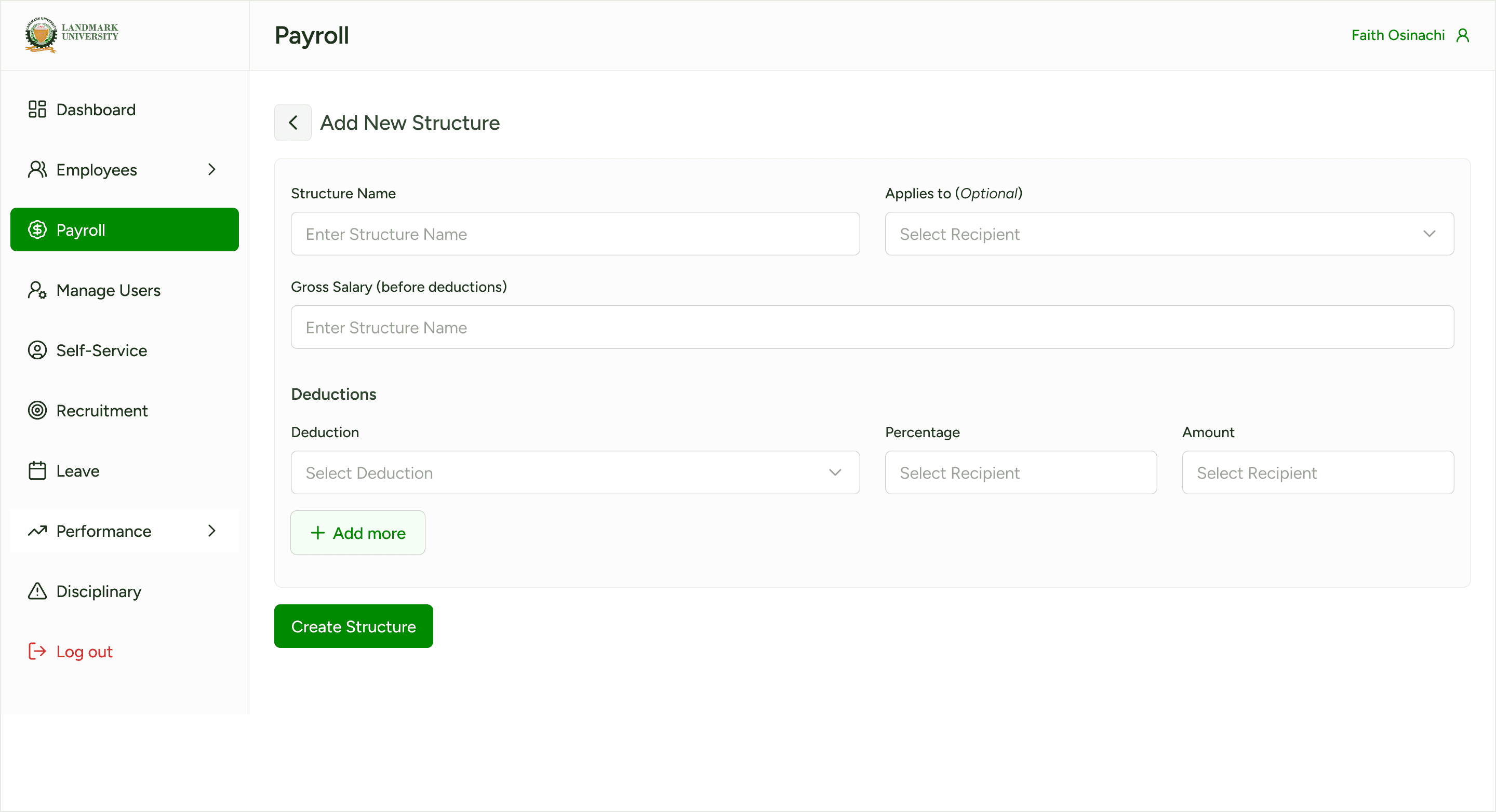
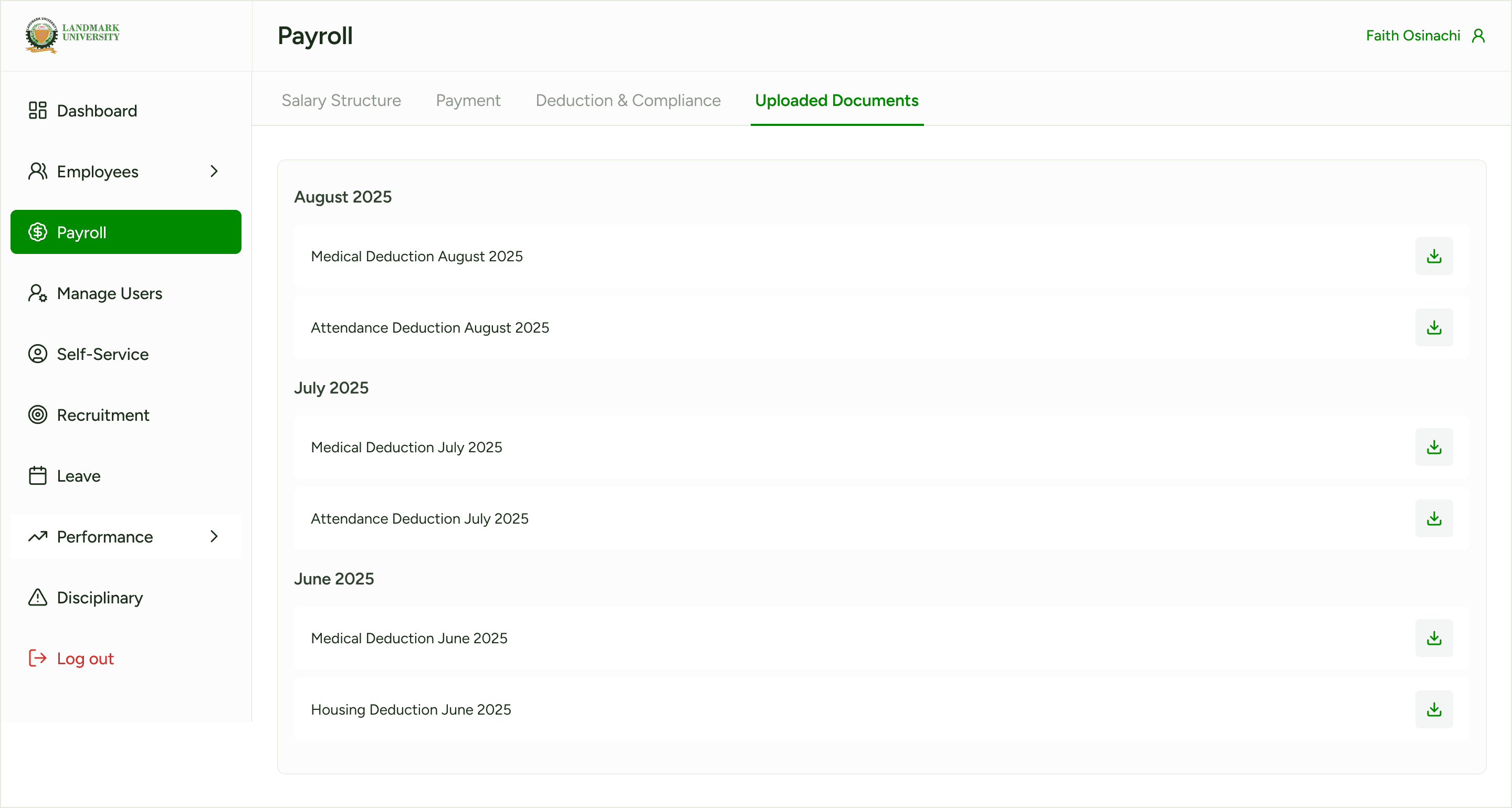
Payroll Deductions Management
I designed a deductions management interface where HR can configure and attach various deduction types (taxes, pension, loans, advances) to specific payroll structures. This allows flexible assignment based on employee profiles and eliminates manual calculation errors.
Rationale: Centralizing deduction configuration gives HR control over complex payroll rules while ensuring deductions are applied consistently and accurately across different employee categories.
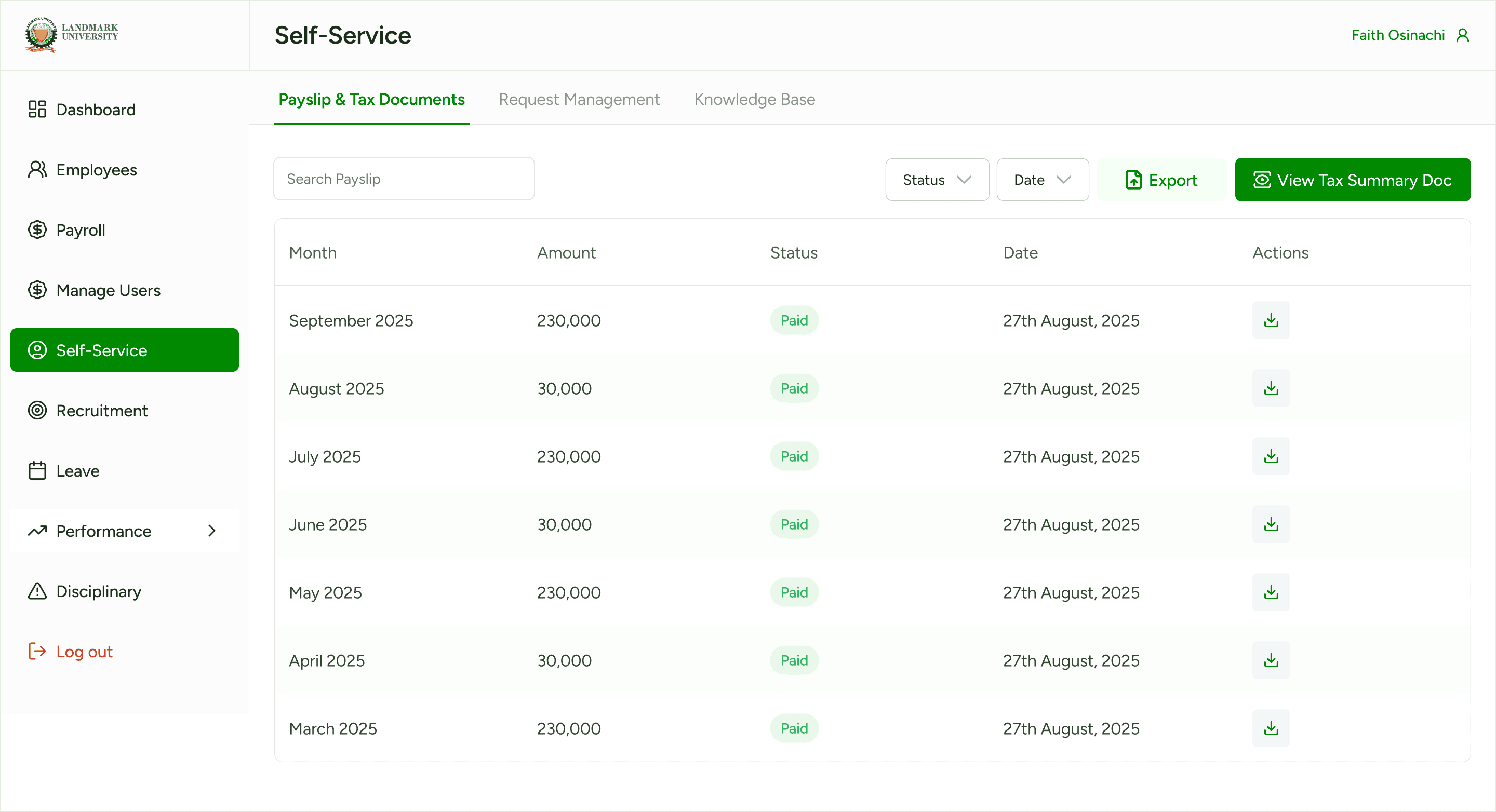
Self-Service Knowledge Base
I designed a knowledge repository integrated into staff portals where HR can publish learning materials (videos, links, documents) organized by topic. Staff access resources on-demand.
Rationale: Moving from push-only communication to a self-service model scales professional development. Staff learn at their own pace while HR maintains one centralized content library.
Screen Highlights
Learnings
Transitioning staff from familiar Excel-based processes required more than just good design. Providing clear visibility into automated calculations (especially for payroll and bonuses) and including audit trails helped build confidence in the new system. Working closely with developers early in ideation also shaped smarter design decisions, helping me understand technical constraints and possibilities that influenced the final solution, like the resume parsing integration.